Summary of ecommerce news relevant to inventory, warehouse, and shipping
Facts
- Shopify added a faster inventory-transfer flow on May 11 that lets staff skip shipment creation, move straight to transit, and track progress on a redesigned transfer page; Shopify Changelog, May 11.
- Shopify added packing-slip printing for inventory transfers in POS and full change tracking for inventory adjustments; Shopify Changelog, May 11 and May 7.
- Target highlighted improved inventory turns in Q1 and plans to use artificial intelligence tools and two new facilities to reduce volatility and in-stock issues; Supply Chain Dive, May 26.
- Walmart is rolling out a Prepaid Consolidation Program so suppliers can send products to one location instead of coordinating shipments to multiple distribution centers; Supply Chain Dive, May 26.
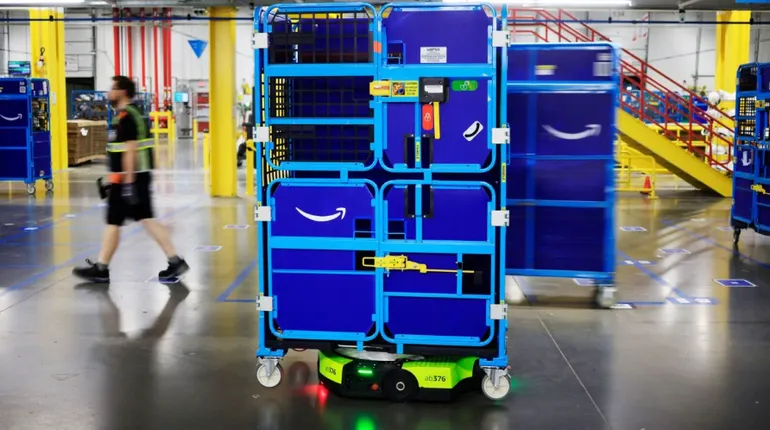
- Warehouse robotics adoption is increasingly tied to intelligent software systems and orchestration, not just physical robots; Supply Chain Dive, May 26.
Interpretation
The category is converging on a simple buyer question: can the system keep inventory truth synchronized as goods move through suppliers, warehouses, stores, channels, and returns? IMS/WMS messaging should connect auditability, counts, and transfers to revenue protection, not just operational cleanliness.
Top 3 important changes
- Shopify made inventory operations more auditable. Faster transfers and adjustment history raise merchant expectations for clear reconciliation logs in every IMS/WMS.
- Large retailers are attacking inventory volatility with network design plus AI. Target’s AI/facility comments and Walmart’s inbound consolidation both point to software that coordinates stock movement before downstream promises break.
- Warehouse automation is now a software story. Robotics coverage emphasizes orchestration, routing, and adaptive systems, which makes bin accuracy and work-state data more strategic.
Competitive intelligence
- Cin7: Current positioning continues to lead with Cin7 ForesightAI, AI Operations, 3PL Connect, and “every warehouse in sync.” This is a clear push to own AI-enabled inventory planning and connected operations.
- Tether: Tether’s homepage frames itself as an AI-native ERP for consumer brands and centers the question “do I have enough inventory?” across warehouses, 3PLs, co-manufacturers, suppliers, and channels. That is directly competitive with planning/reconciliation narratives.
- Luminous: Luminous continues to emphasize multi-channel, multi-warehouse ecommerce operators, with inventory, WMS, demand forecasting, COGS, and “MCP x Claude” AI messaging.
- ShipHero: ShipHero’s WMS language remains execution-heavy: inventory management, receiving/putaway, replenishment, labor dashboards, AI Picking, and pick/pack automation.
- Brightpearl: Brightpearl’s blog published “What Is Wholesale Inventory Management and How Does it Work?” dated May 27, reinforcing educational SEO around inventory process ownership.
- Odoo: Odoo lists version 19.3 as released in May 2026, keeping its broad ERP cadence visible to buyers comparing suite depth.
Customer pain and VOC signals
- “We do not trust the count.” Cycle counting, stock counts, physical inventory, barcode/RFID scanning, and bin accuracy remain the practical foundation for any availability promise.
- “Transfers create gray areas.” Shopify’s transfer improvements highlight a familiar pain: teams need to know what is available, in transit, received, short, damaged, or awaiting reconciliation.
- “Automation creates more exceptions if the data is bad.” AI and robotics amplify bad inventory state unless there is disciplined audit history and exception review.
- “Supplier routing changes break receiving plans.” Walmart’s inbound consolidation example shows why warehouse managers need earlier visibility into inbound changes and appointment impacts.
Market/AI/tech headlines relevant to IMS/WMS/ERP operators
- Warehouse AI is becoming orchestration infrastructure. Supply Chain Dive’s robotics coverage says intelligent software systems are crucial for warehouse operators using robotics.
- Retail AI is being aimed at in-stock reliability. Target’s comments link AI tools to reducing volatility and in-stock issues, not just forecasting dashboards.
- ERP suites keep expanding release cadence. Odoo’s May 2026 release listing reinforces that broad platforms will compete on breadth and regular improvements.
Product opportunities or risks
- Opportunity: Package cycle counting as an “inventory confidence loop” with count scheduling, scan evidence, variance approvals, and post-count reconciliation.
- Opportunity: Add transfer-state explainability: available, committed, picked, in transit, received, damaged, short, quarantined, and reconciled.
- Opportunity: Show AI guardrails that only recommend replenishment, transfers, or allocation changes when count confidence is high enough.
- Risk: If competitors own AI operations messaging while IMS/WMS platforms underplay data quality, buyers may view inventory accuracy as a feature rather than the strategic control layer.
Suggested priorities
- Update demos to start with a count discrepancy, not a dashboard: scan, find variance, approve adjustment, sync availability, and preserve the audit trail.
- Create a one-page buyer narrative connecting cycle counts, bin accuracy, and transfer reconciliation to fewer stockouts, less shrinkage ambiguity, and safer AI recommendations.
- Review product surfaces for adjustment-history clarity: who changed quantity, source document, reason code, timestamp, location, and downstream impact.
- Add watchlist tracking for Shopify inventory admin changes, Cin7 AI Operations, Tether planning language, and Luminous AI/MCP messaging.
Watchlist items
- Whether Shopify continues moving more inventory auditability into native admin/POS workflows.
- Whether Cin7 turns AI Operations into packaged replenishment, stockout, and warehouse exception workflows.
- Whether Tether adds public customer proof or release notes around inventory planning and multi-warehouse visibility.
- Whether robotics vendors and WMS platforms start marketing bin accuracy as an AI readiness requirement.
Major competitive product announcements / website updates
- No new major product launch or pricing change was verified in the competitor set during this run. The meaningful movement is positional: Shopify is normalizing better inventory audit workflows, while competitors continue converging on AI plus connected inventory truth.