Summary
Summary: The strongest signal for inventory operators today is the steady move from visibility promises to proof promises. Cin7 is framing multichannel complexity as a connected-stack problem, while Shopify’s recent inventory-transfer and adjustment-history changes show how operational evidence is becoming part of everyday merchant workflows.
For years, inventory software sold visibility as the answer. Put every channel in one place. Show every warehouse. Sync every order. Give managers a dashboard. That promise still matters, but it is no longer enough for operators who are selling through Shopify, marketplaces, wholesale, retail, FBA, 3PLs, and direct warehouse fulfillment at the same time. The harder question is no longer, “Can I see the number?” It is, “Why should I trust the number?”
Why this matters now
The reason this question is getting sharper is multichannel growth. Cin7’s article on managing multichannel complexity in 2026 argues that product businesses can uncomplicate multichannel inventory by fully connecting their technology stack. That phrasing is important because it treats inventory as a network problem. Stock is not just sitting in a warehouse; it is moving through orders, transfers, purchase orders, returns, 3PL feeds, retail locations, ecommerce channels, shipping systems, and finance workflows.
When those systems disagree, operators do not experience the failure as an integration issue. They experience it as overselling, stockouts, late purchasing, double-selling, unexpected shrinkage, slow reconciliation, and warehouse teams keeping side spreadsheets because they do not trust the official record. That is why the market is drifting from “single source of truth” language toward evidence language.
The evidence layer
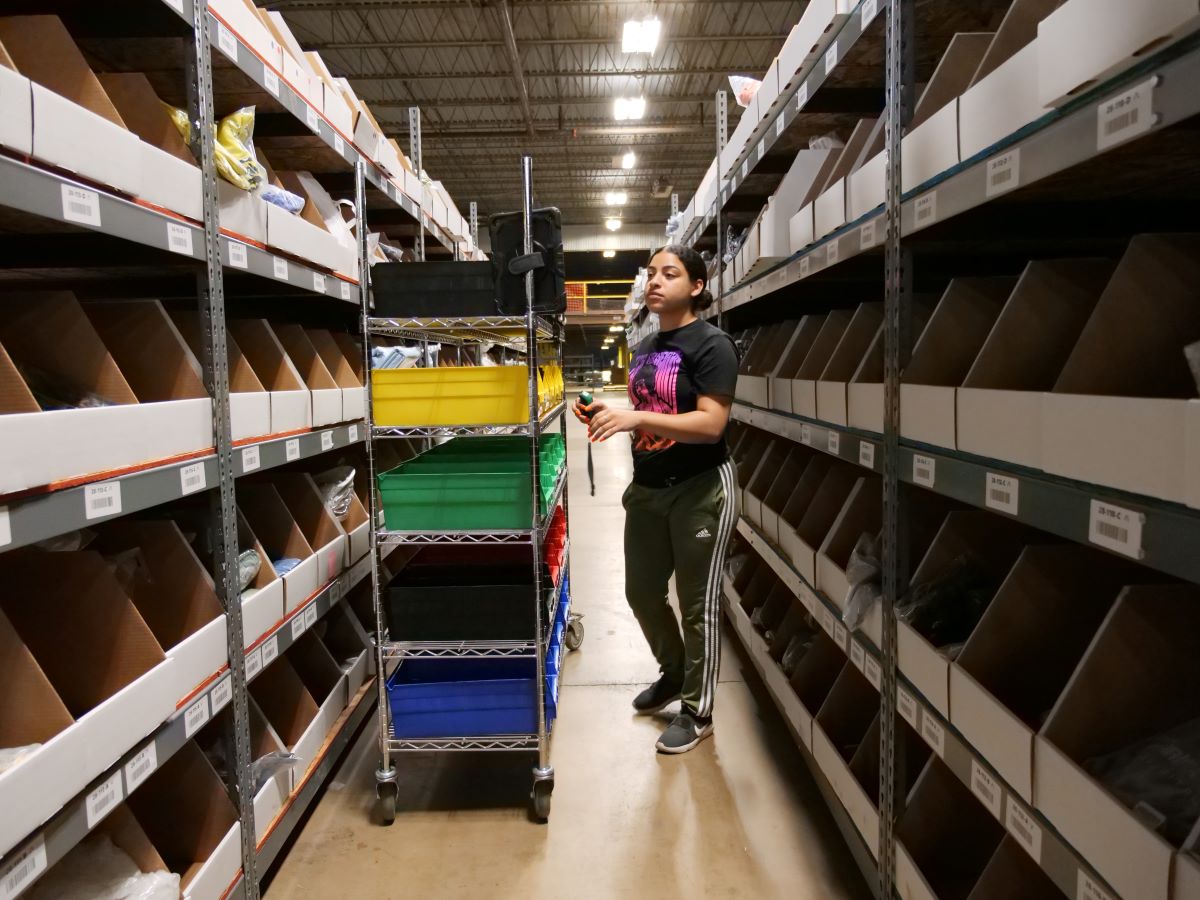
Evidence in inventory management is concrete. It is the last cycle count, the stocktake record, the bin audit, the barcode scan, the RFID read, the adjustment reason, the transfer status, the receiving timestamp, the quarantine flag, and the reconciliation decision. It tells a planner, picker, purchasing manager, or founder whether an available quantity is fresh, stale, disputed, reserved, damaged, in transit, or simply unknown.
Shopify’s changelog offers a useful example of this operational direction. Recent inventory-related entries include simpler inventory transfers, transfer packing slips, full change tracking for inventory adjustments, inventory at locations not active for fulfillment, Flow triggers for completed and ready-to-ship transfers, and a bin-name column. None of those items is a full WMS strategy by itself. Together, they show a platform making stock movement and stock changes more explicit inside merchant operations.
Competitive context
Competitors are surrounding the same buyer anxiety from different positions. Cin7’s June 4 article for growing companies explicitly calls out the moment when spreadsheets and basic tools create overselling, stockouts, and disconnected data. Tether describes an AI-native ERP, and its inventory page emphasizes real-time visibility, stock health, stockout prediction, in-transit units, and transfer recommendations. Luminous places real-time inventory, cycle counts, bin-to-bin transfers, multi-warehouse management, WMS, and Google Sheets replacement in the same operating-system story.
The WMS and retail-operations side tells the same story in execution language. ShipHero keeps warehouse operations, inventory audit, cycle count, picking, packing, receiving, putaway, and labor-management content close to its WMS pitch. Linnworks and Brightpearl keep multichannel inventory, order management, warehouse management, forecasting, and ecommerce automation at the center of their public positioning. Odoo’s Lider Energy customer story adds customer proof around commercial and inventory-management digitization, while its ERP checklist frames supply-chain management as future-readiness infrastructure.
Operator impact
The practical impact is that inventory accuracy is becoming a product experience, not a back-office metric. A buyer evaluating an IMS or WMS should be able to ask: what is the confidence level of this SKU at this location? When was it counted? Which bin is it in? Did the transfer arrive? Who adjusted it? Was the adjustment tied to shrinkage, damage, receiving variance, or a stocktake? Which orders depend on this quantity? Which AI recommendation is using it?
That product experience matters because every automation layer sits on top of the inventory record. Replenishment suggestions, transfer recommendations, shipping promises, ATP logic, labor planning, ERP posting, and AI assistants all become risky when the system cannot explain its source data. A beautifully connected stack can still produce bad decisions if it connects untrusted numbers faster.
Product implications
The opportunity is to design inventory proof into the operating flow. A modern IMS could show confidence badges beside quantities, score SKUs by count age and variance risk, recommend cycle counts before peak periods, surface bins with stale audit history, and require adjustment reasons that map to shrinkage, receiving, transfer, or fulfillment exceptions. It could also present executives with a control view: inventory value at risk, unresolved reconciliation exceptions, locations with weak bin accuracy, and orders relying on questionable stock.
That is a stronger message than “replace spreadsheets.” The spreadsheet is only the visible artifact. The real job is replacing the informal trust system that grew around it. The winning platform will not just import the sheet; it will prove which parts of the sheet are wrong, guide the team through counts and reconciliation, and then keep proving the number every time the business changes channel, warehouse, or fulfillment model.
Sources
Related
The bottom line
Multichannel inventory management is moving beyond visibility because operators already know they have many places to look. The category’s next advantage is proof: the ability to show, at the point of decision, why a quantity is accurate enough to sell, buy, transfer, fulfill, reconcile, or automate from.